







The Harry Potter Reread has heard many parodies to the Fresh Prince of Bel-Air rap in the past week, and is curious about this strange turn of events.
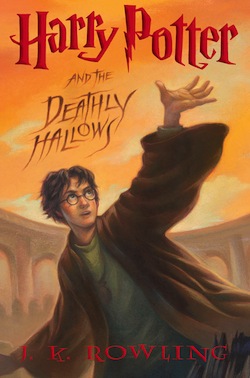
This week we’re getting captured by the enemy and losing a very dear friend. It’s a doozy. We’re up to chapters 23 and 24 of The Deathly Hallows—Malfoy Manor and The Wandmaker. (These are loooooong chapters, so beware.)
Index to the reread can be located here! Other Harry Potter and Potter-related pieces can be found under their appropriate tag. And of course, since we know this is a reread, all posts might contain spoilers for the entire series. If you haven’t read all the Potter books, be warned.
Chapter 23—Malfoy Manor
Summary
Hermione quickly points her wand at Harry and hits him with a jinx, making his face swell. Harry is grabbed, the blackthorn wand taken from him, his glasses falling off. Ron struggles to keep the Snatchers away from Hermione, but they’re taken outside to meet Fenrir Greyback. He asks them all who they are; Harry claims his name is Vernon Dudley (and tells them he’s been stung by bees), Ron tries to pass himself off as Stan Shunpike again before having to use Barny Weasley, and Hermione says she’s Penelope Clearwater. They insist that they’re beyond Hogwarts age and that they didn’t know about the Taboo on Voldemort’s name. The trio are hauled to an area where other prisoners are being kept, and tied up. Harry apologizes to Ron and Hermione for getting them caught, and Dean recognizes his voice. A man named Scabior checks their names, and says that Vernon Dudley isn’t on the list. Greyback asks Harry what house he was in and Harry responds Slytherin. They claim that everyone says that, but no one can ever tell them where the common room is—Harry tells them it’s in the dungeons, under the lake. He tells them that his father works in the Department of Magical Accidents and Catastrophes, and Scabior says he believes there is a Dudley who works there.
One of the Snatchers finds the sword of Gryffindor, and Harry tries to tell them that it belongs to his father (hoping they can’t read the name in the dark). Suddenly, he can see Voldemort’s thoughts again, sees him moving toward a tower…. One of the Snatchers sees Hermione’s picture in the paper, and realizes that she’s not Penelope Clearwater. The article in the Prophet says that Hermione is traveling with Harry Potter, so Greyback gets suspicious. He presses his finger to Harry’s scar, which is already hurting from Voldemort. One of the Snatchers discovers Harry’s glasses in the tent, and they put them back on his face. Instead of going to the Ministry, they decide to take them to Malfoy Manor, the place Voldemort is using as a base, to make certain they get credit for his capture. Harry can see Voldemort approach a skeletal-looking man under a blanket at the top of that tower. The Snatchers gather up the prisoners and Apparate near the manor. The gates asks their business, and swings open when Greyback tells it that they have Harry. While they’re being taken inside, Harry checks in with Voldemort to find him questioning the frail old man, who tells him: “I never had it.”
Narcissa Malfoy opens the door. Greyback and Scabior insist that they have Potter, and she lets them in—Draco is home for Easter and she figures that he will be able to tell if it’s Harry. They take the prisoners into the drawing room, and Harry can hear Lucius Malfoy’s voice. Narcissa calls Draco over to identify Harry, and Lucius is instantly excited; he believes that everything will be forgiven if they are the ones to hand him over. Harry catches glimpse of himself in a mirror and can barely recognize the person wearing his glasses. He decides not to talk, knowing that would give him away. Draco insists that he isn’t sure whether or not it’s Harry, seeming reluctant to look at him at all. Lucius thinks that Harry has been subjected to a Stinging Jinx and tells Draco to look more closely. Draco still insists that he doesn’t know. Narcissa is adamant that they cannot summon Voldemort unless they are certain, noting that the wand the Snatchers handed over as Harry’s does not look the same as the description they got from Ollivander. She recognizes Hermione from Madam Malkin’s, but Draco only says that it’s “maybe” her. He then says the same about Ron.
Bellatrix enters. She recognizes Hermione, and insists on summoning Voldemort, but Lucius stops her. He claims that as its his home, he has the authority, but Bellatrix says he lost such authority when his wand was taken. Greyback reminds them that he gets the reward, which Bellatrix wants no part of anyhow. Lucius is about to summon Voldemort, but Bellatrix stops him. She goes up to a Snatcher and asks for the sword, stunning the man when he does not comply. She takes all of them down, then puts Greyback on his knees and asks where he got the sword; apparently, Snape put the sword in her vault at Gringotts. Bellatrix lets him go and tells Draco to move the Snatchers outside, saying that if he doesn’t have “the guts” to kill them, she’ll do it later. Narcissa is angry at her sister for talking to Draco that way, but Bellatrix has other concerns—she knows they must keep Harry alive for Voldemort if that is him, but she’s also obsessed with how the sword ended up in their possession. She wants the prisoners put in the cellar while she figures out how to handle the situation, but asks to keep Hermione. Ron tells them to take him instead, but Bellatrix says that she’ll only take Ron if Hermione dies during questioning. Greyback puts them in the cellar, but not before they hear a terrible scream. Ron start shouting for Hermione, but Harry tells him that they need to get their ropes off and figure out how to escape.
Luna’s voice suddenly sounds out of the darkness, and she goes looking for a nail to get them free. Ollivander is also in the cellar. Upstairs, they can hear Bellatrix asking Hermione where they got the sword, and Hermione insisting that they found it. Ron tells Luna to use the Deluminator to get light into the room so she can see what she’s doing. Dean and Griphook are also in the cellar, and above, Bellatrix is screaming at Hermione to tell her what else they stole from her vault. Once free of the ropes, Ron tries to Disapparate, but Luna assures them that the cellar is escape-proof. Bellatrix uses the Cruciatus Curse on Hermione; Ron pounds at the wall in near tears, and Harry begin to tear through the items in the pouch that Hagrid gave him. The Snitch and his wand are useless, and the mirror shard falls out, showing a gleam of bright blue eye. Harry asks the shard to help them, and the eye disappears. Bellatrix asks if Griphook helped them steal the sword, but Hermione tells her that it’s just a copy. Lucius suggests that they fetch the goblin and have him tell them. Harry whispers to Griphook to tell them that the sword is fake, but the goblin is barely conscious. Draco comes down and tells everyone to line up against the wall. Ron clicks the Deluminator again to make the room dark, and Draco comes in quickly to take the goblin upstairs. As soon as the door shuts, there’s a loud crack—
Ron clicks the Deluminator again, and they find Dobby in the cellar. He says he’s come to rescue them, and Harry realizes that Dobby can Apparate in and out with humans. Harry asks him to take Luna, Dean, and Ollivander out, and Ron tells him to drop them off at Shell Cottage where Bill and Fleur live. Harry asks him to come back once he’s done that. Luna and Dean are reticent to leave, but Harry insists, then has another view of the old man talking to Voldemort. Dobby Disapparates, but the sound of it draws the attention of Lucius. He has Wormtail go and check. When the man enters the cellar, Harry and Ron jump him, getting his wand pointed out of the way and covering his mouth. His silver hand goes to strangle Harry. Ron does an imitation of Wormtail and tells Lucius everything is fine, and Harry points out that Peter owes him for saving his life—the silver hand around his throat loosens. Both Harry and Wormtail are surprised, but as Ron takes Wormtail’s wand, the silver hand suddenly turns on its owner. For this brief moment of remorse, Peter Pettigrew begins to strangle himself. Ron and Harry try to help him, but there’s nothing they can do, and he dies at their feet.
Ron and Harry run upstairs and quietly move toward the drawing room. Bellatrix asks Griphook if the sword is the real one, and he tells her it’s fake. With that settled, she decides that they can call the Dark Lord. She touches her Dark Mark, and Harry is in Voldemort’s head again. He’s furious for being summoned, and the old man is telling him to kill him, telling him that the wand will never be his. Voldemort murders the old man, and begins his journey back. Bellatrix decides that Greyback can have Hermione, so Ron bursts into the room and disarms Bellatrix, whose wand goes to Harry. He manages to Stupefy Lucius before diving to the floor to avoid various spells. Bellatrix tells them to stop or she’ll kill Hermione—she has a knife at her throat. Harry and Ron drop the wands, and Draco is instructed to pick them up. Bellatrix tells them that Voldemort is on his way, but there’s a strange sound from above and the chandelier falls to the ground. Bellatrix lets go of Hermione and throws herself to the side to avoid getting hit. The chandelier lands on Hermione and Griphook, who is holding the sword of Gryffindor, and Draco’s hands have flown to his bleeding face. Ron goes to grab Hermione, at which point Harry vaults over the furniture, takes all three wands from Draco’s hands, and uses them to Stupefy Greyback. Narcissa draws Draco out of harm’s way and realizes that Dobby dropped the chandelier. Dobby disarms Narcissa, and when Bellatrix expresses mortification that he would dare defy his masters, he says:
“Dobby has no master! Dobby is a free elf, and Dobby has come to save Harry Potter and his friends!”
Harry throws Ron a wand, pulls Griphook out from under the chandelier and grabs Dobby’s hand. As he Disapparates everyone, Harry takes in the sight of the room, of Draco and Narcissa frozen to the spot and Bellatrix’s knife flying through the air toward them. He’s not sure that he can get them to the right destination since he’s never been to Shell Cottage, and he feels Dobby’s hand jerk. They appear somewhere with salty air, and as Harry lowers Griphook to the ground, he asks Dobby if they’re in the right place. When his eyes find the elf, they both see Bellatrix’s knife sticking out of his chest. People approach from the nearby cottage, but Harry can’t be bothered to care; Dobby is reaching for him and Harry catches the elf and lays him down in the grass. He tells Dobby not to die. The elf looks at Harry and says his name one last time before he goes still.
Commentary
Once Harry convinces the Snatchers that he’s in Slytherin, one of the Snatchers says he’s in luck as there “ain’t a lot of Mudblood Slytherins.” I’m sure this is supposed to be a joke—haha, all Slytherins are purebloods—but is it possible that the guy means it seriously and that there are a few Muggleborns in Slytherin? I feel like that potential is passed over as an impossibility, but it made me wonder… if that ever happens, how it it handled within the house? If the environment is too hostile toward Muggleborns, it’s entirely probable that the Sorting Hat simply redirects students who would be perfect for Slytherin into other houses. Or perhaps knowing that Salazar himself would be so against those students belonging to his house makes the Hat avoid the possibility. I think that most Potter fans hope and presume that all four houses get a more diversified following Harry’s generation, but you have to wonder if there were ever any instances of pushback against that particular system ahead of time.
When they arrive at Malfoy Manor, Harry sees an albino peacock, and… damn if that isn’t the perfect animal representation of a Malfoy. That has to be Lucius’ Patronus, right? It HAS to be.
Speaking of Lucius, Rowling is not fooling around with the taking of Lucius’ wand as a completely emasculating act. To the point where Bellatrix is denying him authority in his own home because he “lost” it once he lost his wand. Yeesh.
The power dynamic in this house is fascinating. When we look between Bellatrix, Narcissa, and Andromeda, you have to wonder if they ever got along as siblings. They’re all incredibly different aside from the embedded snobbery that goes with the Black family name. We’re meant to glean that difference largely by how they married, as its the biggest clue; Bellatrix married a cruel, pureblood man (though she clearly cares less for him than she ever will for Voldemort), Narcissa married a more refined man who had wealth and station, and Andromeda wound up with a kind Muggleborn man. Narcissa clearly cares a great deal for decorum and respect; she gets angry with Bellatrix for implying cowardice in Draco. He’s her baby, sure, but the anger in that moment comes down to her sister refusing to afford her son the respect that she clearly believes he is owed.
But the core question of the entire family comes down to whether they buy their “pureblood” status as a sign of superiority. Sirius and Andromeda clearly didn’t, even though both show signs of haughtiness from their upbringing. Narcissa does believe that she’s superior, but she doesn’t want to have to impose that superiority. Both she and Lucius simply want to reap the benefits of their station without forcefully upholding it; they expect others to know their place. The same seems to have been true for Sirius’ parents, who we know thought that Voldemort had the “right idea,” but weren’t interested in participating with other Death Eaters. Both Bellatrix and Regulus are members of the family who are keenly interested in enforcing their position, but Regulus receives an awakening of sorts once Kreacher is mistreated by the man he so admired.
It occurs to me that Bellatrix likely had no problem spending those years in Azkaban. Rowling has said that truly awful people don’t get affected by the dementors the same way that other people do. So while being imprisoned certainly wasn’t enjoyable, she was not getting tormented by the dementors on a daily basis the same way that Sirius was.
If we require any further proof that Draco is done with this whole circus, his complete unwillingness to cooperate does the trick. Here are the three people he hated most in the world throughout his time at school, and the best he can muster is an ‘I mean, it might be them. I dunno.’ I’d be willing to bet that Draco is smarter than his father at this point; while Lucius can only think of how they will be rewarded by Voldemort for turning over Harry, Draco knows better. He knows that life under Voldemort’s thumb, even if they are favored, is nothing to rejoice over. And he probably knows that forgiveness is unlikely either way. He knows that Harry’s survival is the best chance they have at being rid of the Dark Lord.
Is it any wonder that Harry gains the loyalty of his wand without a fight? Draco’s far from angelic, but at this particular point of the story, he’s practically on Harry’s team.
I have this problem where Fenrir Greyback is basically being used as a stand-in for other types of violence against women, and I just hate that it’s there at all. Every time he talks about Hermione or threatens Hermione, I just want to close the book and walk away. It’s a common trope in fantasy, but I don’t really feel like we need it in these books. We don’t need a rapist allegory in Greyback.
By the time we find Luna and company in the cellar, we’re in need of a reprieve, and this couldn’t be a better one. And then we get an even better reprieve in Dobby—who we’ll later find out is sent to them by Aberforth. We have the weird situation of Draco coming down first to retrieve Griphook, but Wormtail being asked to check on the noises downstairs the next time. We’re left wondering why either one or the other wouldn’t have been asked to complete both of those tasks. I suppose we could say that Lucius wants Draco to be an active participant in the proceedings, while Wormtail is little more than a servant to him, but it would have made more sense as a power play exchange—Bellatrix tells Draco to go get Griphook, and Lucius later counters by sending Wormtail down to the cellar. Otherwise it all seems a bit convenient.
Wormtail’s retribution is such an odd point in the narrative to me. We are set up for it well ahead of time, and it makes perfect sense that the silver hand that Voldemort “gifted” to him is the object of Peter’s demise, but the moment itself is so rushed. It’s hard to care much for Peter’s death when Hermione is being tortured and they have to get away from Bellatrix and the Malfoys as soon as possible. In some ways, that is likely the point—Peter has done many horrible things, and his death was never going to be some noble, grand gesture. Unlike his three friends, he doesn’t get to go out fighting, protecting people who love him and care for him. He has his one moment of pity, of regret, and that’s all he is ever allowed. I only wish we got an extra moment to hang on it, to acknowledge that Peter Pettigrew never truly gets redemption on any level; he is a traitor (in a practically mythic sense), and a single bout of conscience does not unmake him.
And now I have to talk about Dobby. (I don’t want to, no, don’t make me.)
It doesn’t matter how many times I think of this moment, how many times I see it or reread it, I’ve come to terms with the fact that it will always hurt exactly the same amount. Maybe more. Definitely more, because there are aspects to Dobby’s life, his arc, that play differently to a full-fledged adult than they do to a college student or a teenager or a child. When I first read this book, this moment was devastating for so many reasons, but the primary one was how Dobby was this character we all make fun of. He was a little annoying, and so determined to harp on Harry when he didn’t really need (or deserve) it. So while it was easy for a reader to understand logically what made Dobby’s story important, he was still going to be the butt of fandom’s jokes. In a lot of ways, he still is.
And yet here he is. And here he falls. And there is no one in all of these books who deserves it less.
That’s the point, of course. We juxtapose Peter—who in essence, gets what’s coming to him—with a figure of pure innocence and heart, who at every turn acts selflessly and thoughtfully (even when those acts are embarrassing or accidentally life-endangering). It’s those characteristics that have us making fun of Dobby in the first place because most people can’t help but find ultimate goodness a little irksome. Dobby means well, but please stop him from making ornaments that read “Have A Very Harry Christmas!” because how can he not know that’s terrible?
But this time, I thought about the bigger picture. And I thought about what Dobby stands for—one of the first of his kind to stand up for their rights and welfare. And it suddenly hit me: of course he dies. He was always going to die. Because the people who take that first step, who take the biggest risks by moving over the line and fighting ahead of everyone else, they are always the ones who get hurt. They are always the ones who pay the price.
If you need further proof of that, you need only think about what happens directly before Dobby’s death: He tells Bellatrix Lestrange that he is free, that she is not his master, that she has no power to dictate his actions. He tells her that he’s come to save his friends, effectively telling everyone whose side he has chosen. Bellatrix doesn’t throw that knife indiscriminately—she cannot chance hurting Harry because she knows that Voldemort wants him alive. She throws that knife at Dobby deliberately because he dared to talk back to her. To forget his place. And she had to make sure he remembered it.
Dobby’s death isn’t simply about Harry losing someone else, though it occupies that place in the narrative. It’s about the danger faced by any marginalized person who challenges the status quo imposed upon them. Harry survives this ordeal because he’s too “special” to kill. But Dobby wasn’t.
And that is why we must honor him.
Chapter 24—The Wandmaker
Summary
The whole scene is like a nightmare to Harry, like Dumbledore dying all over again, and he keeps saying Dobby’s name over and over even though he knows the elf won’t come back. Bill, Fleur, Dean, and Luna rush to his side, and Harry asks about Hermione. Bill tells him that Ron has taken her into the house and that she’s going to be fine. Harry takes the knife out of Dobby’s body, then covers him with his own jacket. Dean takes Griphook inside, and Bill suggests that they bury Dobby. Harry agrees, barely present. He feels his scar burn, and distantly sees Voldemort punishing everyone back at Malfoy Manor. Harry’s grief for Dobby seems to lessen Voldemort’s anger, and suddenly he’s asking Bill for a spade so he can bury Dobby himself without magic. He digs a grave between bushes at the edge of their garden, and enjoys the hard work to honor the elf. It occurs to Harry that Voldemort cannot reach him now because grief is an aspect of love, and Voldemort won’t touch it. The loss wakes him up, and he finds himself no longer longing for the Hallows. He realizes that he knows who Voldemort killed at Nurmengard, and that Dumbledore seemed to have known what Peter’s fate would be.
At dawn, Dean and Ron come out to meet him. They jump down into the grave and help Harry finish the work. Harry wraps Dobby tighter in his jacket, and Ron takes off his socks and puts them on Dobby’s feet. Dean puts a hat on Dobby’s head. The others come out unnoticed, Hermione included, and Luna suggests that they close his eyes, saying “Now he could be sleeping.” Harry puts Dobby in the grave, thinking that he deserves a funeral as grand and Dumbledore’s, and only gets this rough hole in the ground. Luna suggests they say something and thanks Dobby for rescuing them, saying it was unfair that he died, and that she hopes he is happy. Ron and Dean also say thanks, and Harry says goodbye. Bill uses magic to move the earth back and fill the grave. Harry asks to stay there for a while. He picks up one of the large stones lining the garden, takes one of the wands from his pocket and makes cuts in the rock until it reads: HERE LIES DOBBY, A FREE ELF.
He heads inside to find everyone in the living room listening to Bill. They’ve moved the whole Weasley brood to Muriel’s; since the Death Eaters now know that Ron is with Harry, it was time to get the family tucked away safely. Bill tells Harry not to apologize, that they knew it was only a matter of time. They’re being protected by the Fidelius Charm, and Arthur is the Secret-Keeper. Bill is the Secret-Keeper for Shell Cottage. He says they’ll move Ollivander and Griphook to Muriel’s once they’re well, as she has more room. Fleur gave Griphook Skele-Gro to fix his legs. Harry says they can’t be moved until he speaks with them, and asks to wash first. As he cleans up in a basin, he thinks that Dumbledore somehow helped them, that he was the one who summoned Dobby, who had been in the mirror shard. He thinks of all the things that Dumbledore knew were coming—Peter’s remorse, Ron needing a way back—and wonders what Dumbledore knew about him. He sees a flash of a very familiar building from Voldemort—Hogwarts.
When he comes back, he asks to talk to Griphook and Ollivander. Fleur insists that they need to rest, but Harry is adamant that he speak to them now and separately. Bill asks him what’s going on, and Harry reminds him that they’re not supposed to talk about it. Bill finally gives in, asking Harry who he wants to talk to first. Harry decides on Griphook, making the final decision to get back to tracking down the Horcruxes. He asks for Ron and Hermione, finally getting the chance to ask Hermione how she’s doing and applaud her ability to lie to Bellatrix under pressure. Bill takes them upstairs to a room and carries Griphook in. Harry apologizes for having him moved and asks after his legs. He says that Griphook probably doesn’t remember, but the goblin stops him—he does remember taking Harry to his vault the first time he came to Gringotts. Before Harry can think of what to say next, Griphook points out that Harry buried the house-elf, and that he’s unusual for a wizard. He then points out that oddity of Harry having rescued him as well. Harry figures there’s nothing for it, and comes right out with his request: He needs help breaking into a Gringotts vault. Griphook says it’s impossible, but Harry points out that it happened that very day he first came to Gringotts. The goblin tells him that the vault in question that time was empty and had minimal protection. Harry confesses that the vault they need to break into is the Lestranges.
Griphook tells him it is impossible again, but Harry counters that he’s not doing this to steal treasure, that the theft is not for personal gain. The goblin says that Harry is the only wizard he would believe that of, that his kind and elves aren’t used to being given any respect or consideration from “wand-carriers.” He talks of the long-denied right for goblins to carry wands, to which Ron counters that goblins that can do magic without them. Griphook is angered by the reply, telling them that wizards won’t share the secrets of wand magic, preventing goblins from gaining more power. Ron says that goblins don’t share their magic either, that they won’t share their smithy secrets. Harry tries to calm everyone, insisting that this isn’t a wizard versus goblin issue, but Griphook disagrees. He points out that even in times like these, humans are still above goblins and elves, that Gringotts is taken over by wizards and house-elves are killed, but no one in the magical community protests. Hermione cuts in, saying that they protest, that she is a Mudblood who is thought of as no better than a goblin or a house-elf. She points out that Bellatrix chose to torture her back at Malfoy Manor. She tells Griphook that Harry was the one who set Dobby free, and that they wanted elves freed for years. (Ron looks uncomfortable at that.)
Griphook asks what they are seeking in the vault, as the sword they have is the real one. Harry suggests there might be other important items in there, but Griphook says he cannot betray what is left in their care, items that are often gobin-made. He says that they are very young to be fighting, and Harry asks if he will help. He promises to think it over, and Harry thanks him without pressing. Harry lets him alone to sleep, but takes the sword with him, noting that the action upsets Griphook. Ron complains that they’re being kept waiting, but Hermione realizes that Harry believes that there’s a Horcrux inside Bellatrix’s vault. Harry figures that’s why she panicked when she thought that they had been there. Ron can’t figure why the bank would be important to Voldemort, but it occurred to Harry that perhaps Voldemort envied anyone who had a key at Gringotts, a true symbol of belonging in the wizarding world. He figures that Voldemort wouldn’t have told Bellatrix that it was a Horcrux, the same way he never told Lucius the true nature of the diary. With that, they head over to Ollivander, who is a mess from over a year of torture and near-starvation. Harry apologizes for disturbing him, but Ollivander says he cannot thank Harry enough, as he imagined he would die in that cellar. Harry shows Ollivander his wand and asks if it can be repaired, but the man tells him it’s far too damaged.
Then Harry asks him to identify the two wands he took from Malfoy Manor. He identifies the first as Bellatrix’s wand, and the second as Draco’s—but when he talks of Draco’s wand he claims that it “was” his. Harry asks for clarification on that, and Ollivander tells him that if Harry took it from Draco, the wand may have switched its allegiance. It’s an iffy subject, but often if a wand is won, it changes its loyalty. Harry points out that the man talks about wands like they can feel and think for themselves, and asks if a person can use a wand that hasn’t “chosen” them. Ollivander says that it’s possible, but that wands tend to do better for wizards they have an affinity with, and that wands and wizards learn from one another. Harry asks if he can use Draco’s wand safely, and Ollivander suspects so. Ron hands over Wormtail’s wand and asks if he can use that one. Ollivander says that if he won it, it will likely work for him. Harry asks if that’s true for all wands, which Ollivander affirms. He then wonders why Harry is asking question about wandlore, being such a complicated area of magic. Harry asks if it’s necessary to kill the person that you win a wand from, but Ollivander doesn’t believe so. Harry points out there are legends of wands that do this, at which point Ollivander cottons on, asking how Harry could know that Voldemort was interested in it. He tells the trio that he was tortured and had no choice but to talk.
Harry understands, but he asks after the progression of events that led to the search for the Elder Wand. When he asks Ollivander about how his wand could have broken Lucius’ borrowed wand, the man tells him that he cannot understand why that happened. When Harry asks him to confirm that Voldemort asked about the Elder Wand, and he does, Hermione is astounded. It occurs to Harry that if Voldemort examines Hermione’s wand back at Malfoy Manor, they’ll use Priori Incantatem and figure out that his own wand is broken anyhow. Ollivander tells Harry that Voldemort seeks the wand not to conquer Harry’s, but because he believes it will make him invulnerable. Harry asks if he believes the wand exists, and Ollivander insists that its history is largely traceable. He is not certain that the wand needs to pass hands via murder, however. Harry asks if Ollivander was the one to tell Voldemort that Gregorovitch had the wand, and he admits that he did, as it had been a long-standing rumor. Harry asks Ollivander if he knows about the Deathly Hallows, but it’s clear that he knows nothing about it. He pleads that Voldemort was torturing him, clearly ridden with guilt, but Harry thanks him and asks him to rest.
The trio head out to the garden, and Harry tells Ron and Hermione what he knows; that Gregorovitch did have the wand, but it was stolen by Grindelwald. As he speaks, he knows that Voldemort is at the gates of Hogwarts. Harry tells them that when Dumbledore beat Grindelwald in their famous duel, the Elder Wand passed to him. The wand is at Hogwarts. Ron suggests that they go retrieve it immediately, but Harry knows it’s too late. Ron scolds him for not going to get it immediately, but Harry tells him that he knows that Dumbledore wanted him to get the Horcruxes, not the wand. Harry sees Voldemort walking alongside Snape, dismissing the Headmaster back to the castle and casting a Disillusionment Charm over himself. He goes to Dumbledore’s tomb and breaks it open—finally taking the Elder Wand for himself.
Commentary
There are many points in this series where Harry is forced to deal with immediate grief, and every time, Rowling handles it with significance, taking care to make each passing different from the others. There’s less shock now, for Harry, but the processing of Dobby’s death still requires that he take some time alone and tune people out. The act of digging the grave is feels particularly realistic; using tough physical activity as a way of working out debilitating emotions is something that many people do, particularly if they’re trying to stave off depression. The silent acts of Ron and Dean, helping Harry with the grave and giving Dobby clothes to wear, are beautiful footnotes to the whole ordeal. These kids have come a long way, and they understand what Dobby’s loss means.
It’s Luna, of course, who knows what to say when no one else does. Luna, who has also dealt with loss, who has already been subjected to terrors in this fight. And then Harry marks the grave in a way that would undoubtedly make Dobby happy, and that’s all the time they have to spare. The fact that loss manages to clear Harry’s head is of deep importance. Nothing points out one’s own selfishness quite so well as the selfless death of a friend, and it’s here that Harry makes the decision to go after the Horcruxes and forget the Hallows quest.
The talk with Griphook is essential for a number of reasons. This is the first clear impression we’ve gotten of the goblin side of things, and we learn a great deal about how these prejudices are enacted. The term “wand-carrier” strikes Harry, and it struck me too, in terms of the wider wizarding world. For example, we know that wands are a European invention and primarily of use in the western world. It begs the question—are goblins and house-elves primarily bound to Europe and the western world? For goblins it seems unlikely, as we know that Gringotts has offices in Egypt, where Bill was working. If that’s the case, it means that goblins likely encounter plenty of wizards who don’t use wands; do they have a better relationship with those humans? What about the house-elves? Are they restricted to the western world, or do many wizards have them across the globe? If not, do other wizarding communities find the European use of house-elves abhorrent? Do they know about the practice at all?
Ron’s argument with Griphook is a typical sort of argument used by people who don’t recognize their own privilege (and it makes sense coming from Ron as he isn’t in an ideal place to recognize said privilege, coming from a poor pureblood family that are regularly called “blood traitors”). He says: But you guys have your own magic that you don’t need wands for! When Griphook points out that the denial of wands to goblins is about deliberately denying them power, Ron changes tactics to: Well, you don’t share your special stuff with us! What Ron doesn’t understand is that goblins are not obliged to share their knowledge with a group that denies them basic rights in the first place. In the question of who has more systematic power, wizards are clearly the winners. It’s not the responsibility of the species they oppress to offer all their power and secrets in order to be treated like equals.
Harry uses a derailing tactic without really intending to—he insists that these problems are not about “wizards vs goblins”—but Griphook won’t let him get away with it. He points out that the wizarding population is doing nothing to protect other groups from Voldemort’s oppression, that they don’t care about the suffering of others in this war. Hermione counters that, speaking out about what happened to her at Malfoy Manor. It’s a fine line she’s walking here because in one way, she’s correct; Voldemort and his followers hate her and other Muggleborns every bit as much as they hate goblins and elves. On the other hand, Griphook is speaking to overall oppression at the hand of all magic-users—which Muggleborns are often complicit in through ignorance or inaction. Hermione is at least able to tell Griphook that she wants no part of that system, that she has truthfully been working for the rights of elves. But Griphook is still well within his rights not to trust wizard kind, regardless of what she says.
On a character level, however, this moment is huge for Hermione. Because, as I’ve said before, we’re mostly in Harry’s head. Up until then, we haven’t heard what the events at Malfoy Manor meant to Hermione, and what we find is a stark reminder of just how hated she is as a Muggleborn. Harry is only in danger because he was handpicked to be Voldemort’s opponent. But like I said—he’s special. No one’s allowed to touch Harry without Voldemort’s say-so. Ron certainly isn’t well thought of, but he still has a pureblood name. And so Hermione is going to be on the chopping block first, every single time. She’s in the most immediate danger every step of the way, and yet she never falters for a second. And it’s time to recognize that, to acknowledge her for it. Hermione spends all of her time at school proving that she can be every bit as talented as a pureblood students, but all her accomplishments only make her more of a threat to people who hate what she is. If Hermione Granger doesn’t succeed, it’s because she’s a Mudblood. If she does, then she’s dangerous. And out of school, in the midst of the war, it only gets worse.
Poor Ollivander. The man can’t stop apologizing for the things he said while he was captured without hope of rescue. But the information he gives on wand allegiance is fascinating, and doesn’t feel like a last-minute addition to me; we haven’t really needed to know about this before, as most of the duels we’ve seen up until now were all-out battles, with no one moving to pick up their opponent’s wand. Proper dueling was really only shown in Lockhart’s club. (Oh wow, there is no chance that Lockhart knew about wand allegiance while he was running that club. Imagine if some kid accidentally won the allegiance of another student’s wand.)
The real answer here is simply MORE WANDLORE. I want it.
The downside of Harry being closed off from Voldemort is that he never observes that moment where Voldemort figures out that Dumbledore got the wand off Grindelwald in their duel. I actually kind of wish we did—I like to think that he was furious for the fact that it was right under his nose the whole time. On the other hand, I’m just as happy not to know what he did to the Malfoys for their failure to produce Harry.
As Voldemort heads to Albus’ grave, we see again how he and Harry are alike and yet entirely opposite. Voldemort is at ease on the Hogwarts grounds, loves being there. But when he thinks of this place, the thinks of it as “his kingdom,” a place that he dominates. For Harry, it is simply home. And really, that’s how we know that Harry has to win.
Emmet Asher-Perrin cried through writing this whole darn thing. You can bug her on Twitter and Tumblr, and read more of her work here and elsewhere.

9 times. That’s, by my count, how many times Hermione was Crucio’d. By Bellatrix. Re-read Harry’s internal experience of Crucio at the end of GoF, or how Neville reacted in OOTP. 9 times.
Hermione is the best.
Hedwig’s death was sad and Fred’s death will be upsetting, but it’s Dobby’s death that really hurts. (Fred’s may suffer by not being on screen.) He’s been a presence for a long time in this series (often comedic, as Emily notes), but he also had a strength and dignity that makes his loss here so painful.
This is something that comes more into play later, but since we’re talking about wizard privilege and goblins here, I think it’s relevant. The sword of Gryffindor in some ways really exemplifies that privilege. We’ll learn soon that goblins don’t really sell their works to anybody; it’s more of a lease and they expect to get those things back. Yet the sword clearly defies this, seemingly on its own. Griphook will take the sword in a couple of chapters, but it returns to Hogwarts at the end, giving Nevil his Crowning Moment of Awesome. It seems to me that Godric Gryffindor subverted the goblins’ intent, imbuing the sword with a will of its own and allegiance to wizards over goblins.
The first chapter also gives us a huge clue to a couple of things when Bellatrix says that Snape put the sword in her vault. It sounds mysterious and we’ve seen the sword come to the aid of a Gryffindor before in CoS, so it’s easy to assume that’s what happened here. But Rowling has pretty much outright told us here that Snape is the one who gave the sword to Harry and that he really is working for the good guys.
@1
Trying to pass as Slytherin is beyond stupid. Not only do they know next to nothing about them, but they know that the people they’re talking to probably were Slytherins themselves, so any lie would be immediately detected. In fact, I don’t see how they can hope to fake their identities when the wizarding population is so small, and of course Snape could give Snatchers the complete list of students.
So there’s no counterspell for the stinging jinx? Either it’s really quick thinking on Hermione’s part, or great planning; in either case, that’s just her being awesome again.
I’m surprised there isn’t always a batch of veritaserum ready at Malfoy manor; you’d think they’d constantly use it to get some good blackmail material on everyone. Also, locking up the prisoners without searching them is just sloppy mook work. The fact they didn’t house-elf-proofed the house on the other hand makes complete sense.
I think that’s the last escape that was far too lucky to my taste. For Gringotts, they had a plan (and deducing Bellatrix’s vault contained a Horcrux from her reaction was smart), and for Hogwarts, they had an army. But here, and in other parts before that, I can’t help but think that Harry Potter’s blood is the main ingredient for Felix Felicis.
Which is what makes Dobby’s death infuriating to me. He dies at the very last moment of the escape, almost as an afterthought. That’s a redshirt’s death, a death to show that there is indeed danger, even though it will never hit the main characters. “Just promise never to try and save my life again”: he should have listened. Dobby didn’t die for his own cause, he died to rescue a wizard, like a magical negro. A worthy death would have been dying while helping the elves to escape the Death Eaters during the battle of Hogwarts, thus making them believe that freedom is worth dying for. But I liked having Harry working hard for a house elf: more than the clothes, hard work is the proper way to honour a house elf.
First question to Ollivander: Harry’s own wand. Now he’s clear about his priorities. I wonder whether Harry’s possession of the wand ever becomes public knowledge? I guess not, as it could only incite dark wizards to rob Dumbledore’s grave.
The moment Harry chose the Horcruxes over the Hallows is the moment he fully matured. I simply loved the whole chapter. I remember being in awe the first time I read the book at how Harry was suddenly clear-headed and decisive. And the wandlore…that was exciting to read. I have to imagine that wands aren’t always so fickle and develop loyalty over a period of time. And the wands have to take into account when it’s a serious fight or not (otherwise disarming class would turn into chaos!). Getting defeated in a duel shouldn’t always result in losing or winning a wand’s allegiance, I have to imagine.
Poor Dobby.
Isn’t it curious that he wasn’t killed by magic, but by a common knife? There’s probably a meta-meaning to it, but I can’t think of one.
@@.-@ The freedom to make his own mistakes was all Dobby ever wanted.
Great Post.
Though, I do getthe argument that Ron’s making with Griphook. And the world get’s dicey when everyone who says,”check your privilege” is automatically given a pass when it comes to checking theirs. It seems as though Goblin magic predates the use of wands, and possibly the existence of a wizarding world this large. This being the case, I’ve always pictured the not sharing as being based on mutual antagonism between humans and Goblins, in large part brought about because their cultures are so different, and neither side seems to be interested in bridging the gap.
I disagree with Emily. I think the discussion on wandlore was rushed. It would have been better if that had been woven into the course of one of the other books. European wizards are 100% reliant on their wands. Without their wands, almost all of them are magically incompetent. If that is the case, I find it difficult to believe that some of the basic elements of wandlore is not well known in the wizarding community. Most wizards see their wands as only a tool. If one breaks or is lost, just replace it. Yet, from what Ollivander said, the wands are in some ways sentient. Or at the least, their is an attachment between the wizard and the wand. How is that not taught (at least at the basic level) to the general wizard populace. I believe that JKR has said that different woods and cores produce different characteristics. One type of core or wood works better fro a certain type of personality. How can the general wizarding world not know that.
If that knowledge is generally known, then that should have been a focus of one of the earlier books. But it is only one portion of a chapter to give the hero knowledge he needs to vanquish the villain. On the other hand, if I am wrong (and that even the basics of wandlore is known only to a few), then that is a serious falling of the wizarding society. The society as a whole does not understand the wizard’s primary tool. In today’s world, it would be like somebody not understanding how basic technology works. It just seems unimaginable. (I mean people who use the technology on a day to day basis. I do not mean some native in an island in the middle of the Pacific Ocean who has never seen technology — if such a place exists.)
Thanks for reading my musings.
AndrewHB
@9 The Wizarding World is SUPER intellectually lazy. They aren’t interested in knowing stuff. I’m sure there are people around who have an interest in wand lore and know more than the average wizard, but as a rule they just accept the very basics of how things work.
Re: the Black sisters. I’ve read speculation (don’t know if it was ever confirmed) that Rowling modeled them on three of Mitford sisters, Diana, Unity, and Jessica. There were 7 Mitford siblings total, including the celebrated author Nancy Mitford, but those three are noted for their involvement in the fascist and communist movements in the mid 20th century.
Diana (Narcissa) — married to Oswald Mosely, an aristocratic MP who was also the founder of the British Union of Fascists. Reportedly very beautiful, was a lifelong supporter of the BUF (later called the Union Movement), but made conflicting statements about her beliefs later in life.
Unity (Bellatrix) — worked with Diana in the BUF, through it met and became devoted to Hitler. Moved to Germany to be part of Hitler’s inner circle, became close enough to him that Eva Braun was jealous of their relationship. Attempted suicide after Britain declared war on Germany, never fully recovered and died 9 years later at 33.
Jessica (Andromeda) — Social/civil justice activist and journalist. Renounced her privileged family and became an adherent of communism, later marrying a like-minded lawyer and moving to the US. She and her husband left the Communist Party in the 1950s after becoming disillusioned by post-war Soviet Union
Obviously, there are differences, but it is an interesting comparison
Wormtail was prevented from killing Harry, essentially because Harry had previously spared his life. But that reward of mercy feels very hollow to me, because all this awfulness might not have happened if Wormtail hadn’t escaped and resurrected Voldemort.
@9
Your point about wizards not knowing anything about wandlore being like people not understanding technology is actually the perfect analogy.
Wizards know how to use wands while knowing nothing of how they work. This is pretty much exactly like how people in modern society are with technology and the science that underpins it. And you are right, it is mind-numbingly stupid and dangerous. It is the reason Carl Sagan cited for his work in public science education.
Building a society, let alone a democratic one, on something that very few people understand is just asking for it, and that is precisely what we have done. If anything, our society is even more dependant upon technology than wizards are on their wands.
I completely agree with @13. Too many countries have absolutely no programming in the common curriculum, and even though almost everyone uses a computer every day, many will still go to their friend who “knows computers” at the slightest bug rather than trying to look themselves. Not knowing the first thing of the technology you use every day is sadly very common, and it gets worse when you consider questions of privacy and data security, that most people just completely dismiss until their private information get leaked. Computer literacy should be far more widespread in our societies.
Isn’t the real Penelope Clearwater a muggleborn as well?
@9 – ironically, I work at a software company and am even considered pretty good at my job (technical support of our software and programming in some obscure languages, although we’re also transitioning to some more mainstream stuff which I’ve also learned but am by no means an expert in) but I know very little about operating systems, hardware, networks, etc. (I’m actually in the process of going back to school to get more basics in this type of knowledge so I can move to a more technical role).
So I can totally believe wizards are ignorant about wand lore. That said, while we did get SOME hints of this in earlier books (about wands choosing wizards, the twin cores) I did find it to be a bit too much information, too late in the game. Although rereading is helping – I haven’t read this book as much as the others, so I found there was a lot of stuff I had forgotten that helps make sense of all of it.
Regardless of what and who Dobby died for, I think it’s important that it was his choice to make. I agree it’s definitely sadder as an adult (in truth, I found him annoying – and not because he was ‘good’, as usually I am the one ranting against the mindset that good characters are boring/annoying- but because I can’t get into bumbling/slapstick humor).
The discussion on privilege is pretty interesting and there is more to dig into in the next chapter.
@15: That’s not sure and never confirmed. It’s possible that she was petrified because she happened to be with Hermione during the attack.
@17: OTOH, the petrifications are referred to as “four attacks on Muggleborn” in one instance, and in another Ginny is said to have attacked four mudbloods and a cat. Colin is one, Justin is second, Hermione another. It’s *possible* that Nearly-Headless Nick is the fourth muggleborn, but it certainly seems more likely to me that Ms. Clearwater was the fourth muggleborn meant.
While I agree that people today don’t understand how their technology functions on physical level, I feel like the basic wand lore we hear about here is a little different. Using the internet as an example, a better analogy would be people today not understanding that other people can access their online accounts if they guess their password. Most people under 40 understand this is possible even though they don’t know how. It is also pertinent to point out here that we only have had this technology for 20 years, not even 1 generation, compared to hundreds(?). Remember, we don’t learn anything about why wand’s change allegiance just that they suddenly, conveniently do for plot reasons. Even the “programmer” in this case doesn’t understand why his code is doing what it is doing.
As a side note, anyone else wonder when/why Bellatrix learned how to throw a knife or why she had a throwing knife on her person when we don’t see wizzards carrying physical weapons in general?
Maybe it was a magic throwing knife, or a magically guided one? I mean, it was obviously a ridiculously good shot, especially if she had the foresight to realize that hitting Harry would be a huge problem.
It was almost assuredly a magic-assisted throw, unless Bellatrix happened to regularly throw knives when she was bored (that actually doesn’t sound that far-fetched). Wizards have some small ability without a wand, so I going with magic-assisted.
Oh, I could totally see her as a knife thrower (she’d probably practice on house elves :P ) but I also think she’d augment with magic since she may not want to sink to ‘mundane’ interests.
Question: if Shell Cottage is protected by the Fidelius Charm with Bill the secret keeper, how is Dobby and everyone else under the sun able to apparate in and out of there like it is no big deal? I guess this could be chalked up to ‘House Elf magic is different’, but that explanation is starting to wear thin. Presumably Ron has been told the secret, so he would be okay; but he is not the secret keeper and could not share it with others. Come to think of it, it was Harry who was apparating at the end there, not Dobby, so that is a bit dodgy. I guess they are just apparating close to the spot? But they could not see the place or enter until Bill came out and told them to enter?
I think Harry apparated but didn’t know where to go and Dobby pulled them along with his elf magic. As to how they got around the Fidelius charm…I think that has to be an error in storytelling. There’s no way to chalk it up to “elf magic.” I have to imagine it’s simply an error.
@3 KalvinKingsley – hahaha thanks for posting that gif. I think of that moment every time I hear anything happened 9 times.
About Lucius’ patronus… I’m not completely sure, but I thought somewhere earlier (maybe book 3? 5? a fan theory I read somewhere?) we learn that as patronuses are good magic; dark wizards can’t cast them? So do we think Lucius can cast a patronus?
I don’t think he’s a super dark wizard, so maybe he could cast a patronus? But he’s at least a sort of dark wizard, and aligned himself with dark wizards, so I could see it going either way. …Or I could be wrong about who can cast a patronus.
I feel like we might have discussed that on this reread at some point, and Rowling supposedly said somewhere that Voldemort couldn’t cast a Patronus because he had no happy memories (I doubt that), but I don’t recall it being mentioned in the books. Umbridge can do so, we recently saw, and she’s as evil as they come even if she’s not a Death Eater. Mind you, I’m not sure what officially defines “Dark magic.”
I wondered about the Fidelius Charm and Apparating, too, but when I looked more closely at the text it seems that the Fidelius Charm was only cast after they got there (and the rest of the family was evacuated/hidden with a Fidelius Charm at aunt Muriel’s house at that time, too).
@@@@@ 25: I always thought (not sure why) that the thing about dark wizards not being able to cast patronuses wasn’t meant to be “All Death Eaters,” or even everyone who had ever cast a dark spell (or else Harry casting Crucio would probably count,) but wizards who, like Voldemort, had sold their soul for power. Maybe also wizards like Grindlewald, who were obsessed with their own vision of the future rather than literally splitting their soul apart, or even Bellatrix, who seems as if she wouldn’t have a memory happy enough to conjure one that didn’t involve murdering someone… But I’m pretty sure it wasn’t meant to apply so broadly that it could be used as a litmus test to divide Death Eaters from the rest of the wizarding world. Keep in mind, also, that it’s magic that’s at NEWT level so not every wizard has ever done it before if they didn’t take a NEWT in DADA, or in times of peace they may have done it once in their advanced studies and then never again.
@26 and @28: Maybe I’m remembering the “Voldemort can’t cast a patronus” and that’s what confused me. I did wonder about Umbridge casting a patronus, because she’s certainly evil. I could buy that there’s a certain type of evil a witch or wizard could reach where they wouldn’t even consider casting a patronus. Someone like Voldemort wouldn’t see the need — especially as he built in his own message/summoning system in the dark marks on Death Eaters’ arms.
I forgot too that the patronus charm is supposed to be pretty advanced, as Harry learned it when he was 13 (though granted he was exceptional), so not all witches and wizards of any allegiance could cast it due to its difficulty.
I always imagined that the Patronus charm was an advanced “Light” spell, in counter to Dark Magic spells. I actually once wrote a pretty well-thought essay about the possibility of Light magic, as there always has to be a balance. Most of what is taught at Hogwarts is “neutral” magic, which depends on the intent of the user. Then there are obvious Dark Magic spells, like Crucio or the Horcrux spell. It stands to reason that there are specific “Light” spelIs. This is what Voldemort calls “ancient or old magic.” The charm Dumbledore casts using Lily’s blood is one, I imagine.
I think Rowling missed a great opportunity in book 6 for Dumbledore to teach Harry a very advanced, almost ancient counterspell to Avada Kedavra that even he didn’t master, but hopes that Harry can, as he possess in abundance the power of love. It’s so ridiculously hard and old that most people don’t even know it exists, thus why it’s said that Avada Kedavra is unblockable. It would have played a lot better than all the Deus Ex Machina events that made Harry and Voldemort’s duel so irrelevant.
Anyways, that was just part of my idea of “Light” spells that would include the Patronus charm, as it requires a very happy memory, which can only be related to Light magic. Thus, for one so entrenched in Dark Magic like Death Eaters, it would be virtually impossible to cast such a spell.
As it pertains to wands: Over the years I’ve never been able to understand how wizards had to have wands to perform magic when Elves and Goblins didn’t need them. It seems to me that the wands could, indeed, enhance magic, but shouldn’t witches and wizards be able to perform magic without wands???
There are examples of wandless magic, but I get the impression it’s hard to do, because wizards (in Europe) learn with wands. SO it seems that wands are both an enhancement, but also a bit of a handicap/crutch. To jump franchises, it kind of reminds me of how in Wheel of Time wilders have channeling blocks, or even Aes Sedai can only perform certain weaves with certain hand motions based on how they learn it.
I thought Rowling had said in other regions they don’t focus as much on wand magic.
At risk of being pedantic… European witches and wizards do perform magic without wands — as children. That’s part of how their families figure out that they are magical. It’s a shame that once they go to school they are taught almost solely wand-related magic.
So I don’t know how much that “counts,” as it is usually accidental at worst and undisciplined at best, but magic in witches and wizards is innate.
It does seem like there should be a “wandless magic” class. A wand that’s somewhere between 8 and 14 inches is kind of conspicuous, and being able to do magic without revealing that you are magical by drawing a wand could be a great advantage.
I think Dumbledore could do some wandless magic? At least it seems to be implied that he had abilities beyond wand use (though he did have the most powerful wand in existence, so there’s that).
Wandless magic is hard, so it’s started in sixth year. And since Harry never completed his seventh year, we don’t see much of it. Well, there is also whatever Umbridge “taught”, but that should rather be called “magicless magic”.
Wandless magic isn’t taught in the 6th year. Wordless magic is taught.
How does Dumbledore know about how Peter will die. I didn’t get that bit
@9 – I think it’s important to remember that as a writing style, JKR made it all about being from Harry’s viewpoint, with very few exceptions. We had to find out about the wandlore at the same time as he did. I was royally pissed when the concept of Horcruxes was introduced in Book 6, like I thought we would be winding this all up by then, not introducing new concepts or new characters (such a Robert Jordan thing to do, hehehe), but the bottom line is that with very minor digressions, the reader is in the moment with Harry and I think that is what makes JKR the great writer that she is.
Yes wizards do magic with out wands all the time. Dumbledore does it, Harry has done it, even Ron and Hermione have done it., others have done so as well, Mad-eye has done magic with his walking stick. Look at Victor Krums school, uea they have wands but when they where introduced they where doing hand-magic. It is safe to say that hand magic or none-wand magic was used by students even at Hogwarts more than was pictured on screen or in the books.